
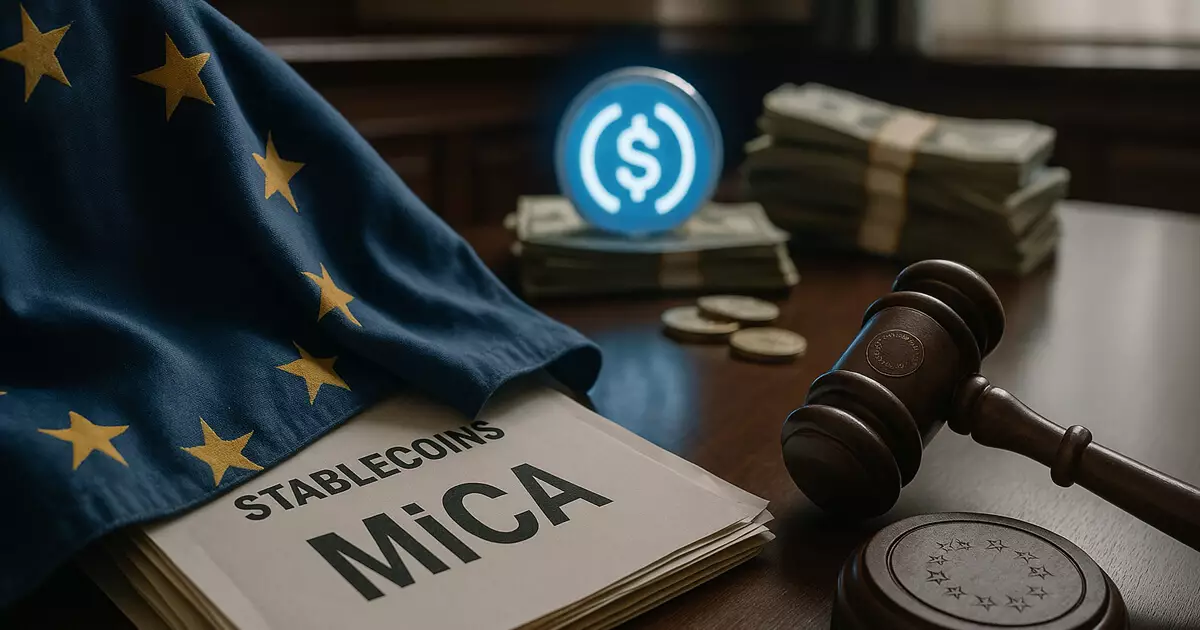
The European Union’s regulatory framework on cryptocurrency, encapsulated by the Markets in Crypto Assets (MiCA) regulation, claims to provide security and clarity. However, the reality is grim. MiCA’s stringent restrictions target euro-denominated stablecoins, which could unintentionally entrench the U.S. dollar’s supremacy within the global economy. If the idea was to create a safe yet vibrant market, it seems like the EU shot itself in the foot. The layers of regulatory red tape make it harder for euro-backed stablecoins to emerge, while simultaneously, they foster the growing dominance of their American counterparts.
The current financial landscape reveals a staggering statistic for anyone who cares about currency competition: more than 99% of all stablecoins are pegged to the U.S. dollar. This isn’t just a trivial detail; it highlights a financial ecosystem that is circling the drain for euros. Instead of challenging this dollar-centric paradigm, Europe is inadvertently accommodating it by rendering euro-backed stablecoins nearly obsolete. The MiCA regulation doesn’t clearly articulate its anti-stablecoin agenda, yet its implications are crystal clear. By creating an almost inhospitable atmosphere for innovation in euro-stablecoins, Europe appears less like a financial leader and more like a segregationist.
Central Banks and Their Imagination Deficit
One must question the logic that propelled the EU toward prioritizing a Central Bank Digital Currency (CBDC) over fostering private sector innovation. The EU’s vision seems laden with antiquated notions, ignoring a historical reality: government-led initiatives often lack the adaptability and creativity that arise from private enterprises. The ambitious hope for a euro CBDC being the panacea to elevate the euro’s global stature feels naively optimistic. The bureaucratic machine can’t replicate the dynamic landscape of private innovation—this much is irrefutable.
Simultaneously, CBDCs evoke legitimate concerns regarding consumer autonomy and governmental overreach. Potential users are likely to view a CBDC with skepticism, worried about the shadows of surveillance and control. Rather than being viewed as a cutting-edge solution, a euro CBDC could easily become synonymous with a clunky, cumbersome relic reminiscent of failed governmental initiatives.
The Illusion of Competition
What Europe seems blind to is that the landscape is continually evolving. The U.S. has managed to maintain a balanced approach by largely resisting a federal CBDC. American regulators are instead allowing the private sector to flourish with stablecoins. This freedom has empowered the financial system, fostering a nimble and competitive market. While Europe builds regulatory fortresses around its ambitions, America glides ahead, setting the pace and determining which way the wind will blow.
Every chance Europe had to challenge the dollar’s ubiquitous presence is slipping away. There’s an irony in the European narrative that seeks to bring competition to the forefront, while simultaneously creating a regulatory environment that favors the dominance of the U.S. dollar through MiCA. As stablecoins continue to proliferate, it’s not merely a question of economic viability; it becomes a geopolitical point of contention.
Europe: A Spectator in the Financial Arena?
As the world embraces blockchain technology, Europe’s cautious overreach may position it as nothing more than an observer in the revolution of financial infrastructure. While other nations innovate and dominate, Europe risks relegating itself to the sidelines merely watching as others draft the rules of tomorrow’s financial engagements.
It’s troubling to consider that European policymakers believe they’re safeguarding financial integrity; in truth, they might be crafting a regulatory vacuum that isolates them from the game altogether. With a landscape that favors innovation and risk-taking cultivating in other jurisdictions, Europe has the potential to resemble an obsolete relic if it doesn’t recalibrate its approach to cryptocurrency and stablecoins.
Time for Reckoning
If the EU desires to see the euro reclaim a respected position in global finance, it must reevaluate its stringent regulatory stance. The lesson is clear: the future of currency will inevitably be shaped by those who dare to encourage innovation, rather than by those who seek to stifle it. If Europe’s MiCA regulation stands unchallenged, we might witness a cascade of missed opportunities that favor the established order, primarily bolstering the dollar’s supremacy instead of paving the way for a competitive euro.