
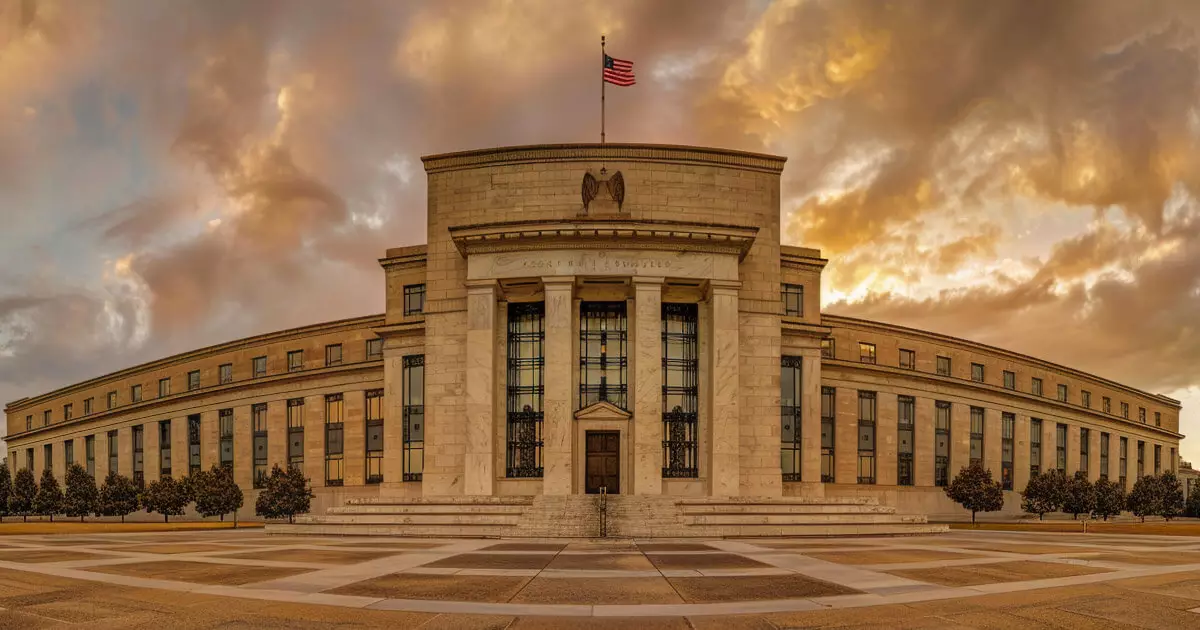
Caitlin Long, the CEO of Custodia Bank, has boldly pointed out a troubling truth about the U.S. Federal Reserve’s recent maneuvers regarding cryptocurrency regulations. While the Fed presents its recent policy rollbacks as progress, a closer inspection uncovers a deeper inconsistency. The central bank’s decision to rescind several restrictive guidelines—yet retain a crucial rule limiting banks from engaging directly with cryptocurrencies—presents an illusion of reform. This selective amnesia regarding certain rules doesn’t just deceive the public, but it’s a blatant attempt to cultivate an environment where only the largest banks thrive.
Misdirection and Monopoly
Long’s assertion that the Fed’s policies tilt the playing field in favor of large banks against smaller, innovative players is an urgent warning about regulatory capture. This behavior reinforces a monopoly on the burgeoning stablecoin market, giving traditional financial institutions a head start while innovative alternatives stagnate. By prohibiting banks from directly holding cryptocurrencies for transactions and instead steering them toward private networks, the Fed effectively brands decentralized finance as risky, and thus unworthy of engagement. This is not just regulatory neglect; it is a calculated choice to maintain the status quo.
Innovation at Risk
The implications of these policies could be catastrophic for the future of blockchain technology in the United States. With every decision to favor a closed network over open blockchain solutions, the Fed is hampering innovation. While the rest of the world embraces rapid fintech evolution, the U.S. risks becoming a laggard, shackled to outdated banking practices. As Long points out, banks are impeded from efficiently offering crypto custody services, which puts them at a disadvantage when engaging with digital asset clients. The failure to adapt to these new technologies is a clear demonstration of how traditional financial entities can hinder progress in a digital age.
The Politics of Perception
This situation has not gone unnoticed within political circles. Senator Cynthia Lummis has echoed Long’s criticisms, labeling the Fed’s actions as mere “lip service.” With a heavy emphasis on the reputational risks that the Fed projects onto Bitcoin and other digital assets, the negative framing of cryptocurrencies further isolates innovation. This rhetoric not only reinforces fear but also shapes public perception, pushing the narrative that innovation is inherently dangerous when, in fact, it is the lack of regulatory clarity that stifles it.
Future Uncertain
Despite the past administrations that sought to foster a more conducive environment for cryptocurrency, it appears that the legacy of bureaucratic resistance remains entrenched within federal policies. There seems to be a systemic fear of digesting the new realities of digital assets, and that fear manifests in regulatory frameworks structured to protect existing power dynamics instead of facilitating growth. As regulatory approaches risk alienating a generation of crypto enthusiasts, the stakes are higher than ever for the future of innovation—a future that seems increasingly in jeopardy.
In concluding this analysis, it’s evident that the Fed’s policies are not once removed from the influence of major financial institutions but are rather a shield under which they operate unchallenged, ultimately stifling innovation and fostering a stagnant market. It calls into question the true intentions behind regulatory “relaxations” and whether we are genuinely moving forward or simply treading water in a sea of favoritism.