
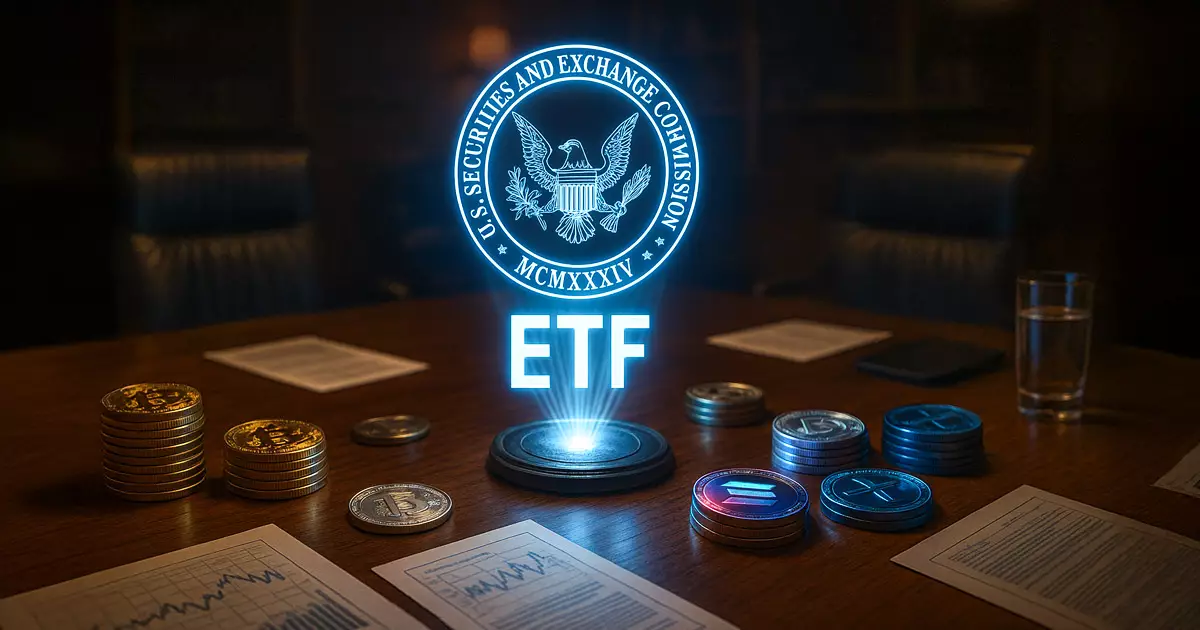
The recent postponements by the Securities and Exchange Commission (SEC) regarding nine cryptocurrency ETF applications underscore a broader pattern of regulatory hesitation that stifles innovation in the digital asset realm. Instead of embracing the disruptive potential of cryptocurrencies, the SEC appears mired in uncertainty, preferring the comfort of bureaucratic delays over decisive action. This cautious conservatism, while understandable to some degree, ultimately hampers the growth of a sector that promises the next wave of financial democratization. By delaying approvals for products tied to Bitcoin, XRP, Litecoin, and Dogecoin, the SEC sends a chilling message: the digital asset ecosystem cannot thrive without clear, consistent, and investor-friendly regulation. Their wait-and-see approach only prolongs market volatility and discourages legitimate institutional participation, leaving retail investors exposed to the whims of unregulated or less scrupulous market actors.
The Flawed Strategy of Stalling for Framework Clarity
The SEC’s current strategy appears less like a cautious regulatory review and more like deliberate stalling intended to delay market maturity. The suggested move towards establishing a comprehensive digital asset framework reflects an acknowledgment of the need for regulation—yet this same process introduces protracted uncertainty. Industry insiders suggest that current delays are not merely about assessing risk but about buying time until a standardized, predictable approval system emerges. This approach effectively maintains the status quo: crypto firms must navigate a complex, opaque case-by-case approval process that leaves their success to chance. Such an environment disadvantages firms with innovative products, leaving them vulnerable to arbitrary regulatory decisions that could change with political winds. It’s a misconception to assume that regulatory clarity should involve paralysis; rather, it should foster confidence and encourage responsible growth.
Prospect of a Standardized Framework: A Mixed Blessing
The ongoing discussions around a generic listing standard could represent a turning point—if implemented correctly. The idea that crypto ETFs could meet predefined criteria, bypassing the traditional slow-moving review process, has the potential to create a more transparent and predictable environment. However, there is a significant risk that this framework, instead of fostering innovation, could become a bureaucratic gatekeeper: a new set of hurdles that entrenched institutions manipulate to maintain their dominance. Moreover, rushed or overly rigid rules could exclude valuable assets or exclude emerging cryptocurrencies that don’t immediately fit into predefined boxes. The process must strike a delicate balance—providing clarity and efficiency without compromising investor protection or market integrity.
The Future of Crypto ETFs: Will Slowness Kill the Industry’s Potential?
The real question, beyond regulatory processes, is whether the SEC’s approach is sustainable in a rapidly evolving digital economy. Crypto enthusiasts and institutional players increasingly see these delays as a sign of resistance, not prudence. This procrastination fuels skepticism and diminishes the perceived legitimacy of digital assets in traditional finance. For the industry to reach its full potential, regulatory agencies like the SEC must evolve from gatekeepers to facilitators. A proactive, yet balanced, regulatory environment would bolster investor confidence and attract genuine capital. Failing to do so might see innovative financial products migrate elsewhere or stagnate entirely, leaving the United States behind in the blockchain revolution. The SEC’s current path risks being a self-fulfilling prophecy of failure—unless they recognize that speed, transparency, and a clear set of rules are in everyone’s best interest.