
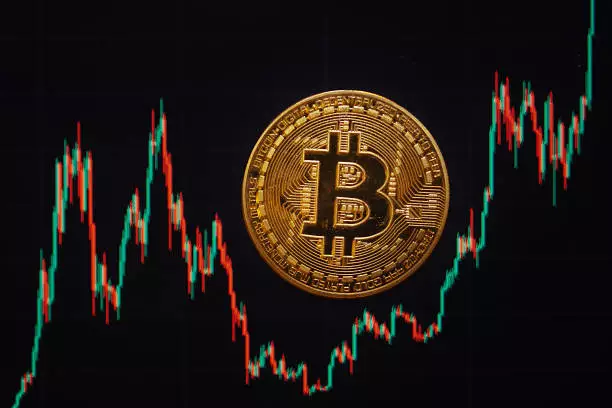
In recent years, Bitcoin has been heralded by many as the new digital gold, the unstoppable force that would redefine wealth and the global financial landscape. Its meteoric rise, culminating in an all-time high that seemed to defy logic, has fostered a sense of invincibility around the cryptocurrency. Investors, driven by FOMO and market euphoria, poured into Bitcoin with the conviction that its trajectory was inexorable. Yet, beneath this glossy veneer of success lies an uncomfortable truth: the illusion of perpetual growth is just that—an illusion. History suggests that no asset, no matter how dominant it appears, is immune to correction.
What makes the current bullish sentiment even more precarious is the prevailing overconfidence that Bitcoin’s rally signifies a new paradigm rather than an overheated speculative bubble. For years, many have naively equated Bitcoin’s upward momentum with fundamental strength, ignoring the cyclical patterns that have historically punctuated its price movement. In reality, recent price surges are more akin to the froth of a bubble nearing its burst.
Why Experts Foresee a Catastrophic Collapse
Prominent market analysts, including seasoned strategists from reputable institutions like Bloomberg, have issued warnings that should make even the most ardent believers pause. A recent projection by Bloomberg Intelligence’s senior strategist Mike McGlone starkly suggests that Bitcoin could experience a retracement of more than 90%, potentially annihilating its recent gains and plummeting below the $10,000 mark.
McGlone’s analysis hinges on the concept that the latest surge to over $100,000 was less an indicator of intrinsic value and more an instance of market euphoria. The psychological tipping point was reached, and historically, such overextensions tend to be followed by sharp corrections. The strategist notes that the bubble-like behavior played out with investors “selling when there’s yelling,” a phenomenon symptomatic of market tops where emotions drive decisions rather than fundamentals.
Moreover, McGlone highlights the troubling shift in Bitcoin’s correlation with traditional markets. Once a largely independent store of value, Bitcoin now exhibits a high correlation with stocks, particularly the S&P 500, suggesting it is increasingly viewed as a risk asset rather than a hedge. This transition undermines Bitcoin’s appeal for those who sought refuge from fiat currency inflation or market downturns, making it vulnerable to broader economic downturns.
Adding to the bearish evidence, volatility metrics—traditionally a vital indicator—are signaling turbulence ahead. After a period of relative calm, volatility indices have surged again, hinting at a brewing storm that could derail the recent optimism. Such signals are consistent with previous market corrections, warning investors that complacency is perilous.
The Flawed Narrative of Ever-Increasing Valuations
A recurring theme in the Bitcoin investment narrative has been the idea that it could one day reach astronomical valuations—$1 million or more. This vision thrives on the exponential growth pattern experienced in earlier cycles, from near-zero to $10,000, and then to $100,000. However, projections by experts like McGlone emphasize that this time, the environment is fundamentally different. Market sentiment is saturated with long positions, and the speculative appetite that once fueled rapid gains has waned.
When Bitcoin was trading close to $10,000, negative sentiment created a fertile ground for a long-term rally. Investors saw value in the asset precisely because it was undervalued and overlooked by mainstream markets. Today, the situation is inverted: most traders are already heavily invested at elevated levels, making the market more susceptible to a sharp correction. There is a mounting sense that the current rally is built on fragile speculative fever rather than solid fundamentals.
This critical perspective dismisses the notion of smooth, upward trajectories into the stratosphere. Instead, it suggests that Bitcoin’s potential to hit staggering targets like $1 million is not a foregone conclusion but an overly optimistic fantasy that neglects macroeconomic realities, regulatory risks, and the cyclical nature of markets. History teaches that overextension inevitably ends in correction, and the current climate bears all the hallmarks of a bubble reaching its saturation point.
In sum, while Bitcoin’s recent high-profile gains are impressive, they should be viewed with skepticism. The risks of a significant retracement, fueled by overheated speculation and macroeconomic headwinds, are not only plausible but perhaps inevitable. Regardless of the crypto fervor, critical analysis reveals that Bitcoin’s emotional peak could be followed by a brutal decline—one that might wipe out most of its gains and reshape the landscape for years to come.