
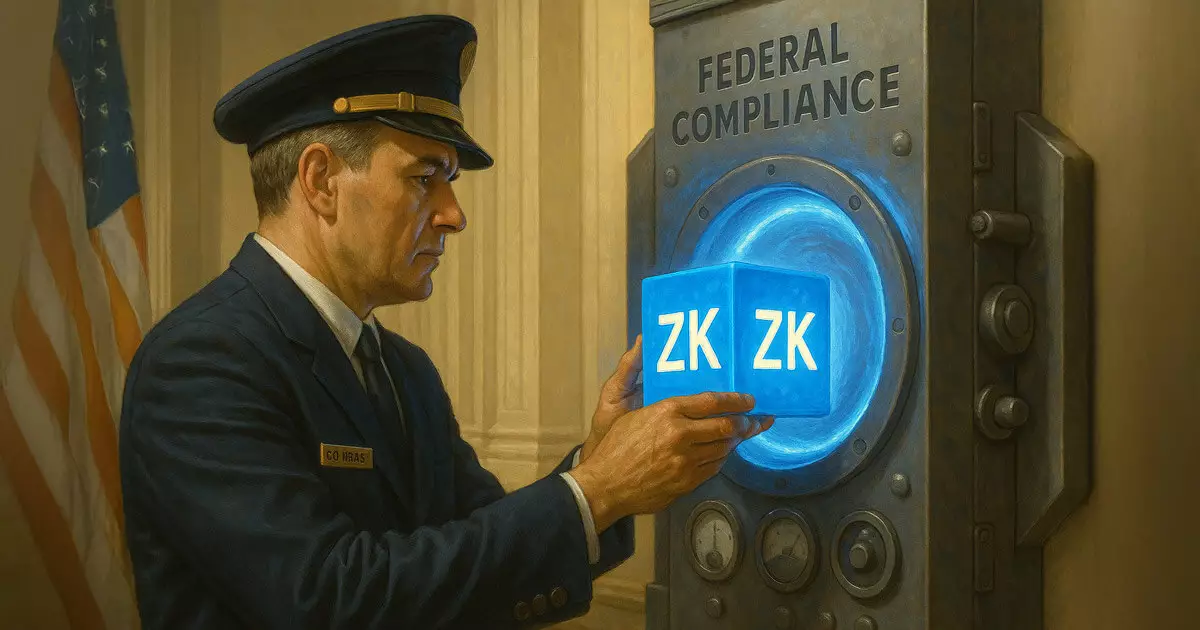
Coinbase’s recent call to integrate Zero-Knowledge Proofs (ZKPs) into the U.S. financial regulatory landscape signals an ambitious attempt to redefine privacy and compliance. While on the surface, ZKPs promise a technological breakthrough—allowing users to prove identity or eligibility without exposing sensitive data—the reality is far more complex. The assumption that cryptographic proofs will inherently secure consumers’ information over traditional methods overlooks the vulnerabilities and unintended consequences embedded within new technological paradigms.
The proposal hinges on the idea that centralizing vast amounts of personal data in conventional KYC procedures creates a lucrative target for cybercriminals. However, shifting this data validation process to ZKPs merely transforms the attack surface rather than shrinking it. If law enforcement or malicious actors obtain control over the cryptographic keys or the setup parameters, the sophisticated shield that ZKPs purportedly provide can be compromised, rendering the privacy advantages null. The implication that ZKPs inherently bolster security neglects the fact that cryptography, while powerful, is not infallible.
Moreover, the promise of privacy preservation through ZKPs oversimplifies the intricate balance between transparency, security, and oversight. Government agencies and regulatory bodies will still require access to certain data points, and the proposed mechanism—subpoenaing the issuer of the ZKP—raises concerns about extending government reach in a way that may undermine individual privacy rather than enhancing it. The delicate equilibrium envisioned could easily tip towards surveillance overreach, particularly if the system becomes a tool for regulators to scrutinize transactions under the guise of privacy.
The Reality of Regulatory Overreach and Government Dependency
Envisioning a future where financial data is shared seamlessly via ZKPs with minimal risk of consumer exposure is alluring but dangerously optimistic. In reality, reliance on cryptography leaves gaps that can be exploited—not only by hackers but also by government agencies with their own agendas. The notion that regulators can simply request detailed information “when needed” glosses over the potential for misuse. It risks cultivating a landscape where privacy is permitted only on the condition of regulatory compliance—something that inherently contradicts the libertarian principles that many in the crypto space champion.
Historically, attempts at integrating new technologies into regulated financial environments have often resulted in increased oversight rather than genuine decentralization. Coinbase’s endorsement of ZKPs could serve as a Trojan Horse, providing a veneer of modernity that obscures expanding government influence over individual financial privacy. Central authorities often portray enhanced oversight as a benefit, but in practice, it can lead to greater surveillance, control, and censorship.
From a practical standpoint, deploying ZKPs on a broad scale also raises questions about implementation, standardization, and interoperability across the industry. Complex cryptographic systems require rigorous vetting, and catastrophic failures or vulnerabilities could emerge from rushed adoption or poorly understood protocols. Without transparent oversight and open security audits, the trust placed in these systems risks becoming unwarranted.
The Market and Political Implications: A Double-Edged Sword
Coinbase’s push for ZKPs comes at a politically loaded moment, where financial privacy is increasingly under threat from regulatory agencies and government initiatives aimed at combatting illicit activities but often at the expense of legitimate users. While the company positions itself as a champion of user privacy, its advocacy also aligns with broader industry strategies to maintain legitimacy within a wary regulatory environment.
However, what appears as a progressive move could be a strategic gamble for Coinbase—one that aligns with a middle-ground ideology that values market innovation but is cautious of state overreach. The cryptocurrency sector has long faced a paradox: the desire for permissionless, decentralized systems clashing with an imperative to cooperate with authorities. Pushing ZKPs might be seen as a compromise—offering privacy where possible, yet accommodating regulatory demands.
This nuanced stance is both pragmatic and perilous. It acknowledges the need to adapt to regulatory realities but also risks inadvertently facilitating increased government surveillance if not implemented with stringent safeguards. As the debate over privacy, security, and oversight intensifies, Coinbase’s role as an influential industry player could either reinforce the potential for genuine innovation or entrench a new form of regulated surveillance disguised as privacy enhancement.
In the End, a Question of Intent and Trust
While the technological allure of ZKPs cannot be discounted, expecting them to function flawlessly within the current regulatory overreach is naïve. The core issue remains: trust must be earned—not through promises of cryptography, but through transparent and tested safeguards. Coinbase’s advocacy suggests an understanding of the importance of modernizing compliance, but it also exposes the fragile line between innovation and regulatory manipulation.
Innovators who truly value individual liberty need to critically assess whether these new tools will serve as instruments of empowerment or, paradoxically, avenues for greater control. The promise of privacy is commendable, but without vigilant oversight and a clear limit to government access, the adoption of ZKPs could morph into a conduit for expanded state surveillance—undermining the very freedoms that crypto champions aim to protect. In this landscape, skepticism is not just prudent; it is essential.