
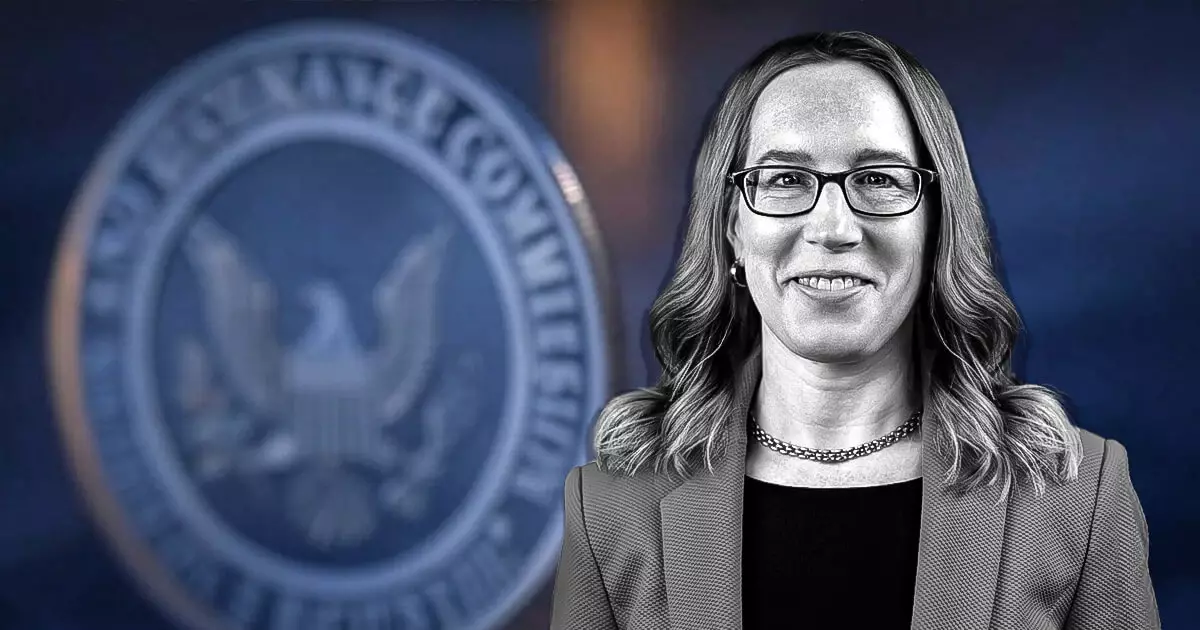
In the rapidly evolving world of blockchain technology, a defining struggle emerges: how to nurture the revolutionary potential of decentralized systems while safeguarding investor interests through regulation. Recent statements from SEC Commissioner Hester Peirce shed light on this delicate balancing act. While advocating for the protection of genuinely decentralized protocols, she signals a cautious stance toward layered solutions that may inadvertently fall under traditional securities law. This perspective reveals an underlying tension—a push and pull between innovation’s unhindered progress and regulatory frameworks designed for a different era.
The core issue at hand centers on layer-2 solutions, which are often misunderstood as purely scalable or efficiency-enhancing upgrades. However, their operational mechanisms—especially when involving centralized matching engines—threaten to blur the lines between autonomous code and regulated entities. Peirce rightly emphasizes that truly decentralized protocols operate “out there” in a way that no single entity owns or controls. These systems embody the ideals of blockchain’s original vision: censorship resistance, open access, and code-as-law. The moment central authorities or controlled matching layers intervene, they risk transforming these open systems into regulatory targets akin to traditional exchanges.
Regulatory Risks for Layer-2 Chains and Their Operators
The critical insight Peirce offers is that layer-2 chains, which often use matching engines to solve issues like Maximum Extractable Value (MEV), could be categorized as securities exchanges if they centralize control over transaction sequencing. These engines effectively act as gatekeepers, ordering transactions in ways that mimic classical trading platforms. Such centralization introduces regulatory complexity because these operations could be legally construed as securities transactions, subjecting them to SEC oversight and registration obligations.
This creates a paradox: the very solutions aimed at improving blockchain functionality might unwittingly bring them under the umbrella of heavily regulated financial institutions. This imposes a potential choke point on innovation, particularly for projects that seek minimal intervention—those built on broad, censorship-resistant networks. The danger lies in the creeping reach of securities law into spaces designed for openness and permissionless activity. Once central parties control transaction flow, they stand on the regulatory radar, possibly exposing themselves to enforcement actions.
Striking a Pragmatic Balance Without Stifling Innovation
Peirce’s stance reflects an appreciation for the importance of preserving innovation and fostering autonomous development. Her call for community-driven solutions to MEV — instead of heavy-handed regulatory intervention — mirrors a belief in the inherent resilience of open-source, decentralized systems. She advocates a principles-based supervisory framework that distinguishes between code operating independently and entities performing regulated activities.
This approach offers a pragmatic compromise: truly decentralized protocols should enjoy a kind of legal safe harbor, shielded from registration obligations, while centralized intermediaries that control transaction sequencing must adhere to existing securities laws. Such a boundary aims to prevent regulatory overreach from choking the foundational decentralized ethos of blockchain-enabled finance. It’s a delicate line—allowing flexibility for developers to innovate freely without risking the future of entire ecosystems by overregulation.
However, the challenge lies in enforcement. As tokenized securities become more prevalent, layer-2 chains processing such assets must continuously evaluate whether their centralized components inadvertently trigger registration requirements. The strategic significance of this lies in the potential disruption it could cause to blockchain’s promise of open, borderless financial systems. A regulatory landscape that favors centralization risks creating a two-tiered system—where only large players with compliance infrastructure can participate confidently—undermining the core mission of blockchain decentralization.
The Future of Blockchain Regulation: A Cautious yet Encouraging Outlook
While Peirce’s comments suggest a cautious approach toward regulation—favoring community solutions and principles-based oversight—they also highlight an unavoidable truth: the regulatory risk is real and growing. The temptation for authorities to classify layer-2 solutions as exchanges could stifle innovation if not carefully managed. Yet, her perspective remains optimistic, emphasizing that thoughtful regulation should empower developers rather than inhibit them.
The bottom line is that banning or overly restricting decentralized innovations in the name of investor protection would be a mistake. Instead, regulation should aim to preserve the distinctive qualities of blockchain technology—immutability, censorship resistance, and permissionless access—while establishing clear legal boundaries that differentiate autonomous code from controlled financial entities. Only through such a nuanced approach can blockchain continue to evolve responsibly without losing its essence as a disruptive force challenging outdated paradigms.