
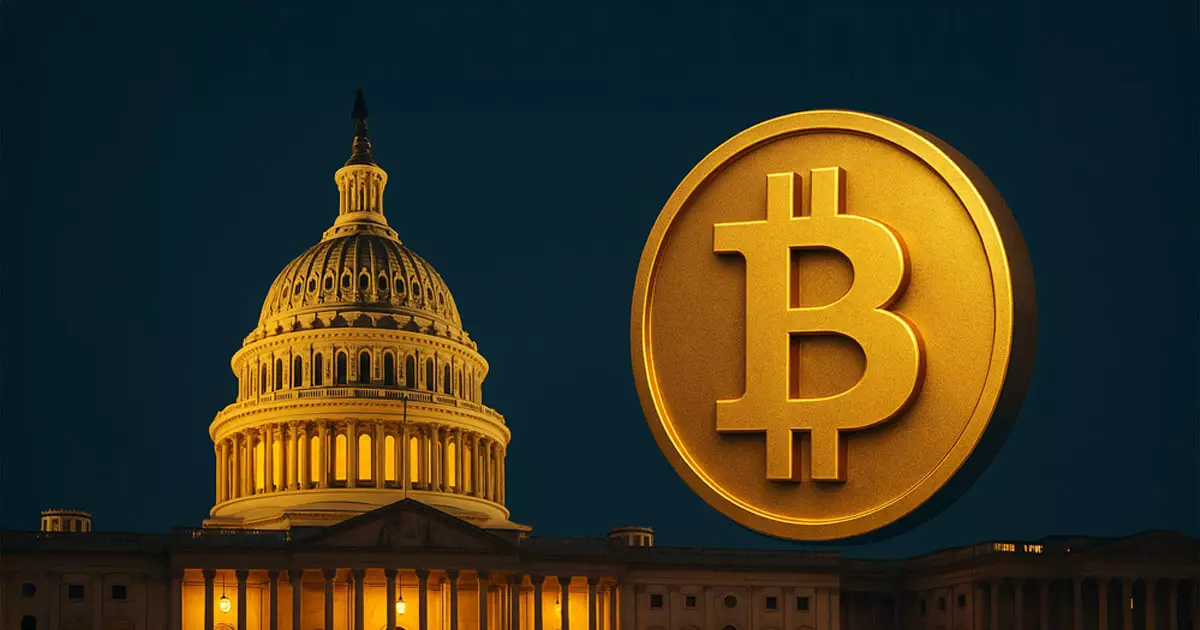
In recent developments, a coalition comprising major corporate Bitcoin holders has heralded a new era of financial sovereignty—at least in their own minds. These industry leaders, including CEOs from firms like Strategy and Riot Blockchain, have formed a “Treasury Council” to promote federal Bitcoin adoption. While their rhetoric claims to advocate for responsible treasury management and innovation, their actions reveal an unsettling overreach of corporate power into government affairs. Positioning themselves as champions of the “future” of finance, these executives are effectively lobbying for the federal government to entrench Bitcoin into its core reserves, an initiative that blurs the lines between private interest and public policy.
Their push for legislative support, exemplified through the endorsement of bills like the BITCOIN Act, exemplifies a dangerous trend: the rise of corporate entities shaping national monetary policies under the guise of technological progress. Behind the veneer of innovation lies an underlying skepticism about traditional financial stability. These corporations, holding hundreds of thousands of Bitcoin, are positioning themselves to influence government strategies—regardless of the long-term implications for economic sovereignty or fiscal responsibility.
Legislative Promises: Unrealistic and Potentially Troubling
The proposed legislation’s goals are ambitious but questionable. The notion that the federal government can or should amass up to one million Bitcoin—valued at over $116 billion—is not simply visionary; it is reckless. Funding would come from the Fed’s earnings, ostensibly at no cost to taxpayers, yet this ignores the systemic risks of anchoring national security to a highly volatile asset class. Bitcoin’s astonishing price swings are well-documented; embedding it into national reserves introduces an unsettling element of unpredictability into the core of government operations.
Furthermore, provisions like holding Bitcoin for a minimum of 20 years or limiting sales to 10% over two years appear more aspirational than practical. Such restrictions could strangulate future flexibility, especially in crisis scenarios where timely liquidity might be crucial. The idea that seized or forfeited Bitcoin, acquired through law enforcement, could be used to expand reserves seems more like a political stunt than a solid strategy for fiscal prudence.
The Risks of a Politicized Digital Asset Strategy
The broader concerns extend beyond mere financial risk. Entrusting government reserves to a digital asset characterized by decentralization, opacity, and extreme volatility foment a dangerous illusion of control. This strategy depends on the premise that Bitcoin’s underlying technology will remain resilient, but history indicates that regulatory crackdowns, technological failures, or market crashes could devastate these holdings.
Most troubling is the influence of corporate and political actors pushing for what could become a de facto privatized control of national digital assets. Such a move risks marginalizing traditional monetary policy, undermining the dollar’s stability, and paving the way for a new form of economic dependence—one that favors blockchain elites over the public good. Allowing government holdings to be so deeply intertwined with a speculative asset class invites future crises rooted in greed, manipulation, or geopolitics.
The Future of Bitcoin in Governance: A Mirage of Progress
The core deception here is the framing of Bitcoin adoption as an inevitable leap into modernity. Yet, behind this narrative lurks a fundamentally conservative and risk-averse approach that underestimates the long-term dangers. The intent isn’t merely to modernize; it’s to consolidate power within a select corporate and political elite, exploiting technological hype to reshape fiscal policy to their advantage.
While advocates tout the resilience and transparency of blockchain technology, the reality is that much of Bitcoin’s value hinges on speculative fervor rather than pragmatic utility. As a purported store of value or a hedge, it remains highly volatile and untested in the face of macroeconomic shocks. The promise of a “federally-backed Bitcoin reserve” might sound innovative, but it ultimately resembles chasing a mirage—an alluring vision of independence that could trap the nation in a web of financial fragility and corporate influence.